
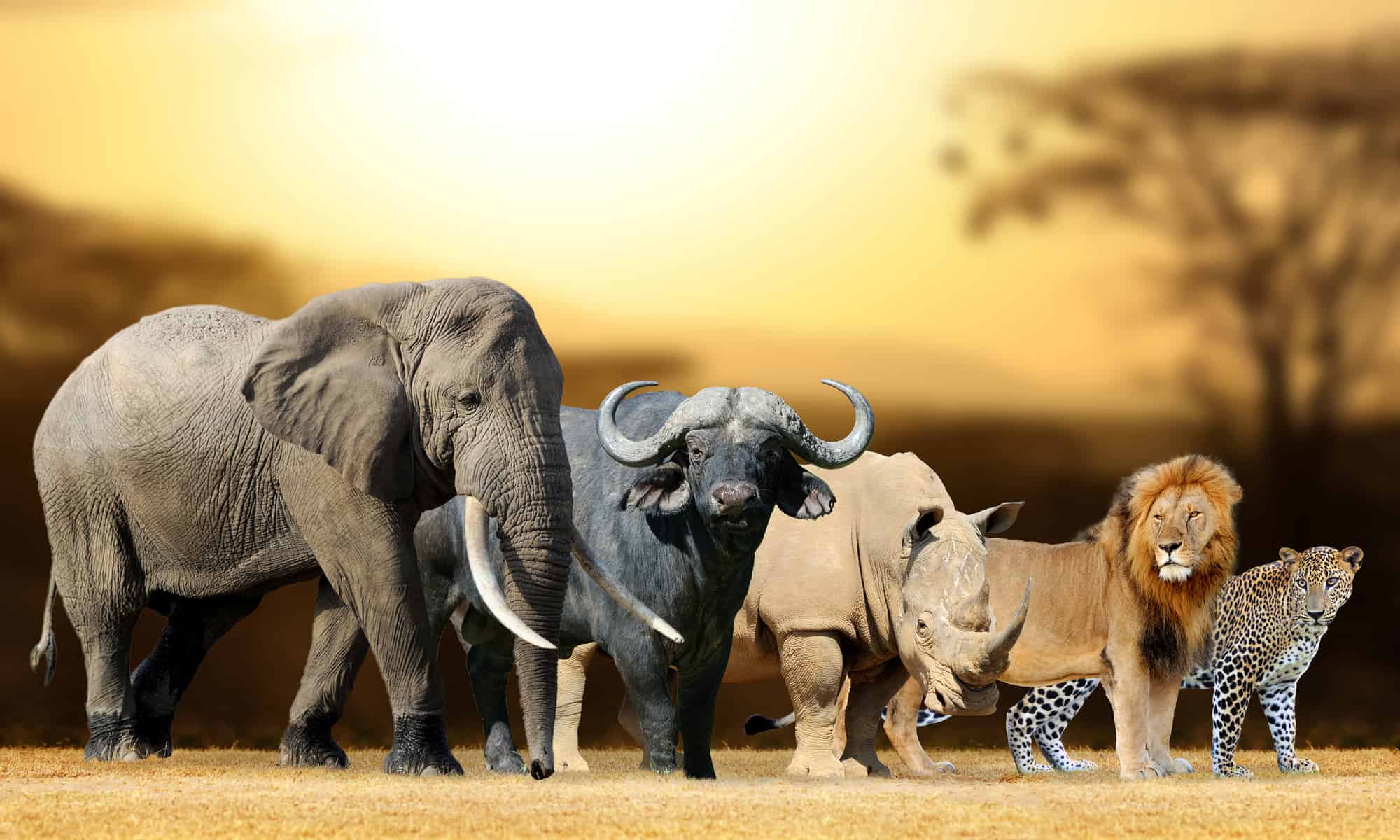
Big Five Safari
The Origin of The Big Five
The term “Big Five” dates back to the era of early big-game hunters in Africa, who used it to describe the five most dangerous and difficult animals to hunt on foot—the lion, elephant, buffalo, leopard, and rhinoceros. These animals were not chosen for their size alone, but for the challenge and risk involved in pursuing them.
Today, the meaning has evolved into something far more positive. Instead of symbolizing hunting trophies, the Big Five now represents Africa’s most iconic wildlife and highlights the importance of conservation and responsible tourism. For modern travelers, encountering the Big Five is a bucket-list experience that showcases the beauty, power, and diversity of Africa’s natural heritage.
The five species that make up the Big 5 are:
African Lion
Leopard
African elephant
Rhino
Buffalo
The Big Five – When & Where to See Them
Discover Africa’s most iconic wildlife—the Lion, Leopard, Elephant, Rhino, and Buffalo—in their natural habitats. Tanzania offers some of the world’s best opportunities to spot all five, thanks to its vast national parks and rich biodiversity.
Best Time to See the Big Five
June – October (Dry Season):
Prime wildlife-viewing months. Animals gather around water sources, grass is shorter, and visibility is excellent.December – March (Calving Season):
Ideal for predators and dramatic wildlife action, especially in the Serengeti.April – May (Green Season):
Lush landscapes and fewer crowds—good sightings but occasional rain.
Where to See Them
Serengeti National Park
Strong chances of seeing lions, leopards, elephants, and buffalo. Rhinos can be seen in designated areas.Ngorongoro Crater
One of the easiest places in Africa to spot all Big Five in one day.Tarangire National Park
Famous for large elephant herds and buffalo.Lake Manyara National Park
Known for tree-climbing lions and diverse wildlife.Selous (Nyerere National Park)
Excellent for elephants, buffalo, lions, and wilderness experiences.
Frequently Asked Questions (FAQs)
1. What are Big Five Safaris?
Big Five Safaris usually describe a safari that focuses on the area’s five most famous and dangerous animals: lions, elephants, buffaloes, leopards, and rhinoceroses. These safaris present an exciting chance to see these magnificent animals up close and personal, ensuring unforgettable wildlife encounters.
Additionally, most travel providers can tailor a safari schedule by offering activities like cultural excursions, guided walking trails, and sunset drives. This enhances the experience of getting an authentic feel for the animals and the region’s inhabitants.
2. Where can I go for Big Five Safaris?
Several African destinations offer Big Five Safaris, including Serengeti National Park in Tanzania, Kruger Park in South Africa, Masai Mara in Kenya and Moremi Game Reserve in Botswana. South Africa’s game reserves, such as Kruger National Park, are renowned for their high concentration of Big 5 species, ensuring rewarding wildlife encounters. Phinda Game Reserve is also celebrated as one of South Africa’s top private Big Five game reserves, offering exceptional safari experiences.
In addition to the iconic Big Five destinations, lesser-known reserves like Hluhluwe-iMfolozi Park in South Africa and Tarangire National Park in Tanzania also offer excellent opportunities for Big Five sightings. Each destination offers a unique safari experience, with diverse landscapes and wildlife populations to explore.
3. What types of accommodations are available during Big Five Safaris?
During Big Five Safaris, visitors can stay in various accommodations, from luxury lodges to rustic tented camps. These accommodations offer immersive experiences, allowing guests to connect with nature while enjoying modern comforts. Many tented camps provide an authentic safari experience, allowing guests to hear the sounds of wildlife from their tents.
4. How do I book a African Big Five Safari?
Researching online reviews and seeking recommendations from fellow travellers can help you choose a reliable tour operator that meets your needs. Additionally, inquire about their conservation efforts and commitment to responsible tourism to ensure your safari aligns with ethical standards and contributes positively to wildlife conservation efforts.
When choosing a tour operator, prioritize those with a strong sustainability track record and ethical wildlife practices. By supporting operators dedicated to conservation and responsible tourism, you can enjoy your safari experience while also contributing to protecting Africa’s precious wildlife.
5. What can I expect during African Big Five Safaris?
During Big Five Safaris, you can expect thrilling game drives from experienced guides knowledgeable about local wildlife behaviour and habitats. These drives offer opportunities to witness the Big 5 in action, from lions hunting prey to elephants roaming the savannah. Night drives also provide unique chances to spot nocturnal animals like leopards and hyenas.
6. Are African Big Five Safaris safe?
Big Five Safaris are generally safe when conducted by experienced guides and within designated areas of national parks and game reserves. However, it’s essential to follow safety guidelines guides provide, such as staying inside vehicles during game drives and respecting wildlife from a safe distance. Additionally, choosing reputable tour operators ensures a safe and enjoyable safari experience.
7. What is the best time of year for African Big Five Safaris?
The best time for Big 5 Safaris differs by destination and wildlife movement. South Africa’s Kruger National Park sees the Big 5 in large numbers around water points during the “dry” winter months, May to September, as animals gather there. Then, the “wet” summer months, October to April, feature green vegetation and newborn animals.
Research the specific destination you plan to visit to determine the optimal time for wildlife sightings and weather conditions. Consider consulting with local guides or tour operators who can give valuable insights based on their experience and knowledge of the area.
8. How long do African Big Five Safaris typically last?
Big 5 Safaris are fragmented by preference and availability. The company package ranges from single-day trips to multiple days in the wild.
Some companies offer safari tours for a few days, while others extend for many weeks. These tours allow YOU to stay in the wilderness for a limited time while visiting varied game reserves and wildlife habitats.
9. What activities are included in Big Five Safaris?
Within Big 5 Safaris, various activities are offered, such as game drives, guided walks, and boat cruises, and the location and accommodation determine the number and available types. Game drives are the predominant activity.
Experienced guides run safari vehicles so visitors can enjoy close-up wildlife encounters. Guided walks are more intimate and conducted within the bush, while informed guides provide wisdom about flora and fauna.
10. How likely am I to see all Big Five members during a safari?
In renowned game reserves like Kruger National Park, sightings of all members of the Big 5 are frequent but not guaranteed due to wildlife’s unpredictable nature. However, knowledgeable guides enhance the likelihood of sightings by tracking animal movements, interpreting fresh signs, and leveraging their understanding of wildlife behaviour. Their expertise ensures guests have memorable encounters with iconic species, contributing to the overall safari experience.
11. Are there opportunities to interact with local communities during Big Five Safaris?
Moreover, while on Big 5 Safaris, guests might participate in cultural experiences included in the visit. This part consists of a tour of the typical nearby villages, schools, and small markets with crafts.
The need to interact directly with the residents is essential, and this also enables guests to appreciate the terrific rich culture of the area, managing to know more details about the varied culture.
12. Can I expect to see rhinos during Big Five Safaris?
Sightings of rhinos, most notably the critically endangered black and less severe white rhinos, are sought after on Big 5 Safaris at selected locations. Because rhinos are elusive and conservation concerns limit encounters, rhino sightings are infrequent and highly anticipated events.
Conservation programs and anti-poaching schemes protect rhinos from uneconomical slaughter and preserve their natural habitat to guarantee their continued existence. Witnessing these massive creatures in the wild is still an electrifying experience.
13. How do Big Five Safaris contribute to wildlife conservation?
Big 5 Safaris makes a massive investment in wildlife conservation by contributing to funding various activities. The necessary activities financed through revenue from tourism activities include anti-poaching initiatives and developmental programs for local communities in areas neighbouring the reserves or conservancies.
Moreover, promoting responsible tourism guarantees the preservation of wildlife habitats and protects endangered species, promoting conservation through tourism. Consequently, anyone participating in Big 5 Safaris is actively involved in the efforts and initiatives to preserve Africa’s wild.Five